Can we celebrate without understanding the origins?
How should we move forward?
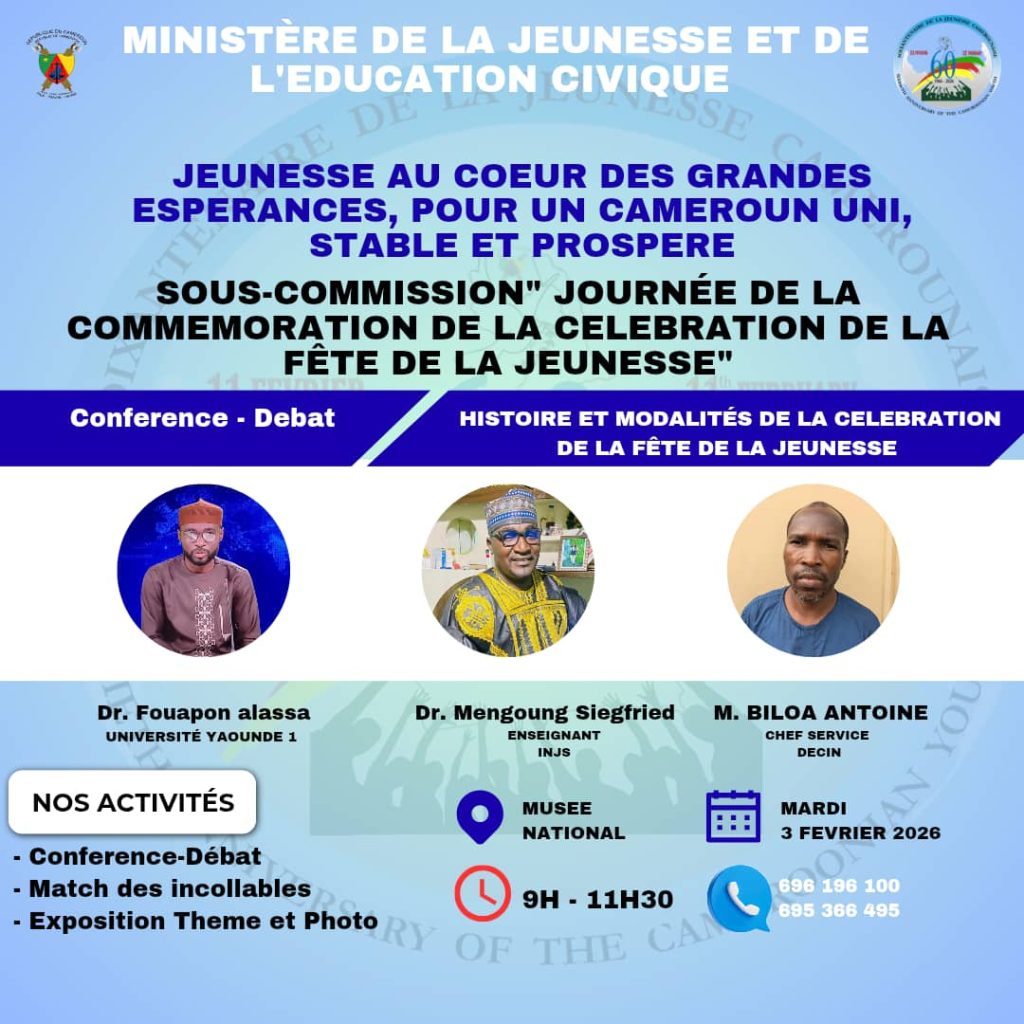
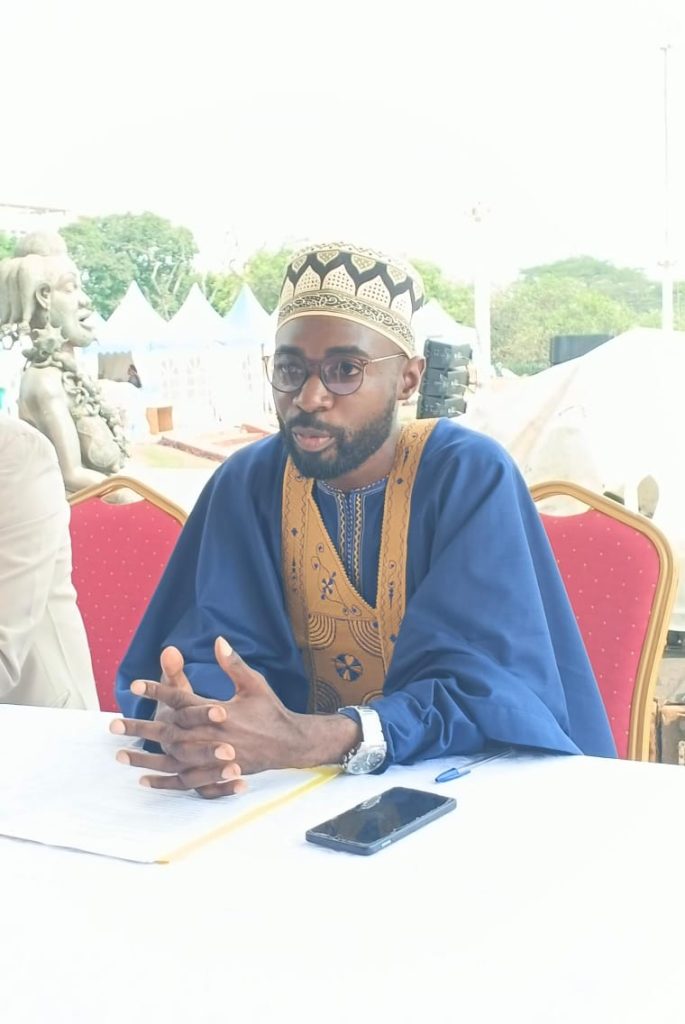
For Dr MFOUAPON Alassa, lecturer at the University of Yaoundé 1, the history of Youth Day is closely linked to that of Cameroon. A Cameroon shaped by colonisation. From the German-Douala Treaty, through Cameroon's placement under mandate and trusteeship, to its accession to independence, Cameroon was led, through a referendum, to lose part of its territory and its citizens. As this event caused much pain, the authorities had to put their will into action. Their aim was to bring young people from both parts of Cameroon closer together.
🎙️ Interview with Ndeuman Noela Epiemembong Ebong, Participant⤴️
The activities of this subcommittee continue with the quiz show.
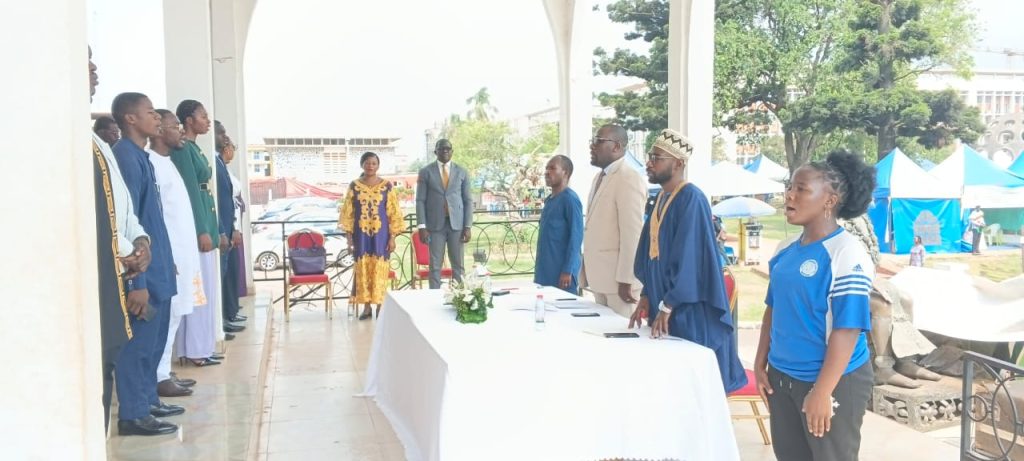
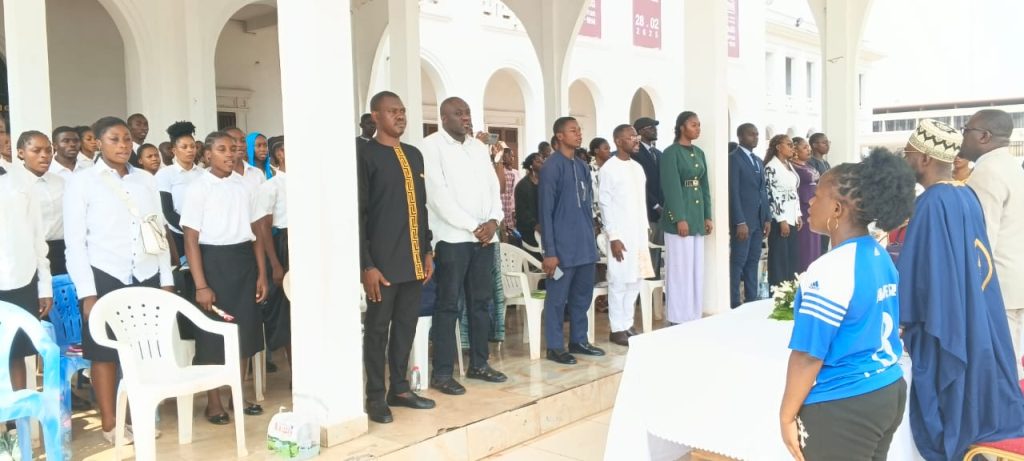
Performance of the national anthem. 🇨🇲
The arrangements for organising Youth Day
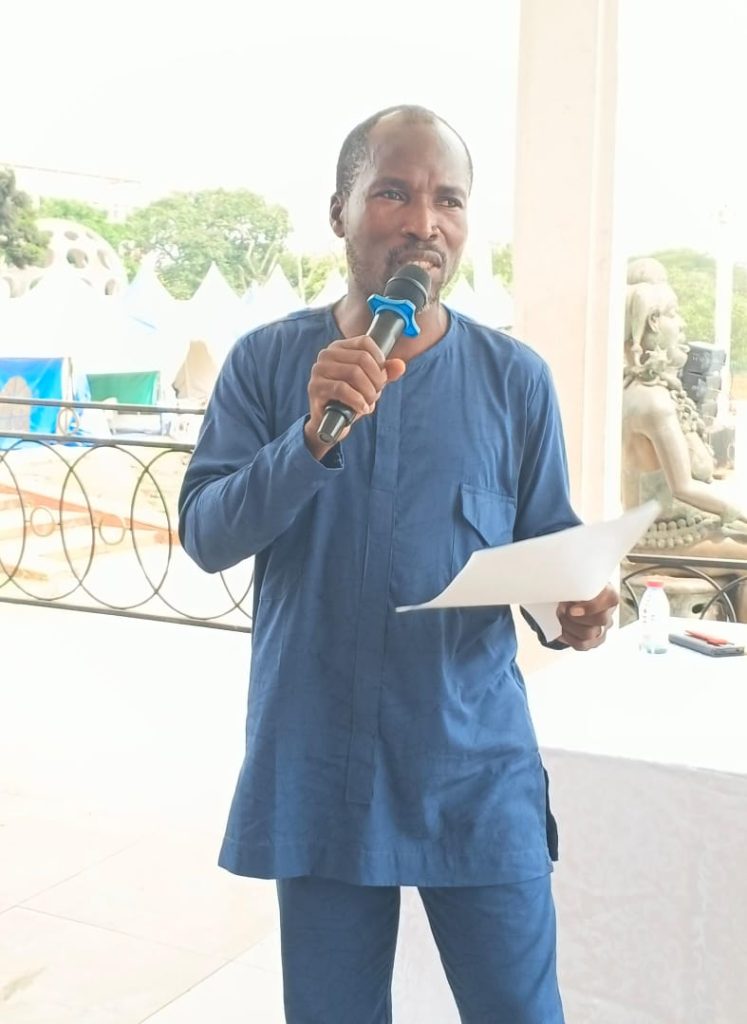
In his presentation, Antoine Biloa explains that organising the Youth Festival is a long and rigorous process, which includes the following steps, among others:
The preparatory phase involves analysing the context and preparing the draft National Harmonised Programme, internal meetings to evaluate the draft NHP, and meetings extended to partners to enrich and validate the NHP.
This is followed by decisions by the Minister of Youth and Civic Education establishing a national organising committee with committees and subcommittees, as well as their respective members.
The committees and subcommittees set to work to carry out the tasks assigned to them.
At the end of this process, implementation takes place across the entire country, with an evaluation phase at each stage of the process.
Young people must continue to write history
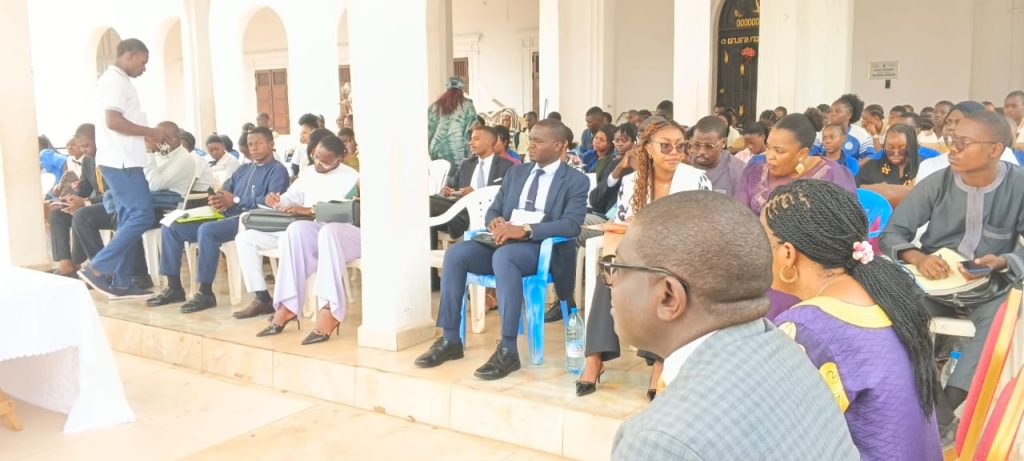
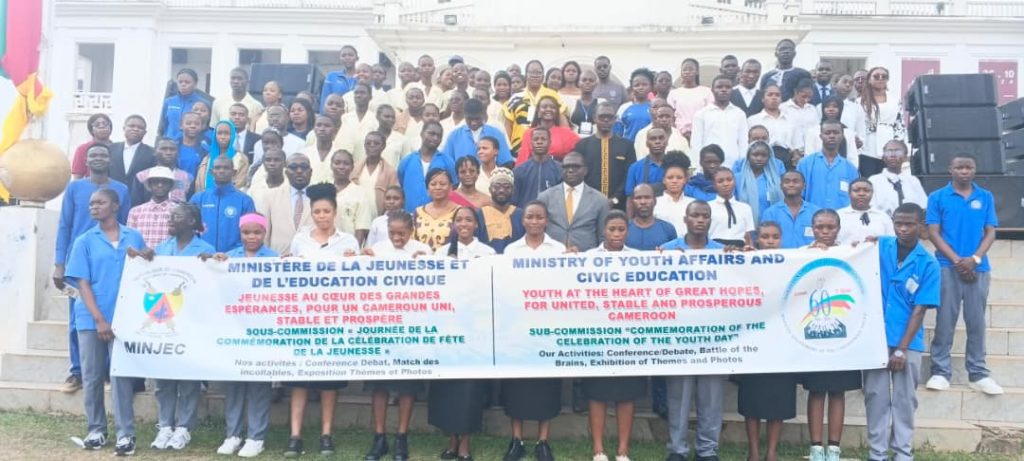
At the end of the constructive discussions between the young people and the panellists, the chair of the subcommittee for Youth Day celebrations took the floor to thank the participants and, above all, the Minister, who had spared no effort to ensure that this activity was included here in the Youth Village.
For him, this is yet another opportunity for young people to immerse themselves in their rich history in order to prepare for current and future challenges. He concluded the first phase of the conference by calling on them to show greater civic-mindedness and patriotism.
🎙️_Interview with Marie Claire Ngono Amougou, student at Collège Sainte Famille_⤴️
🎙️_Interview with Dr Fouapon Alassa, Lecturer in the History Department at the University of Yde I_⤴️

 English
  Français